
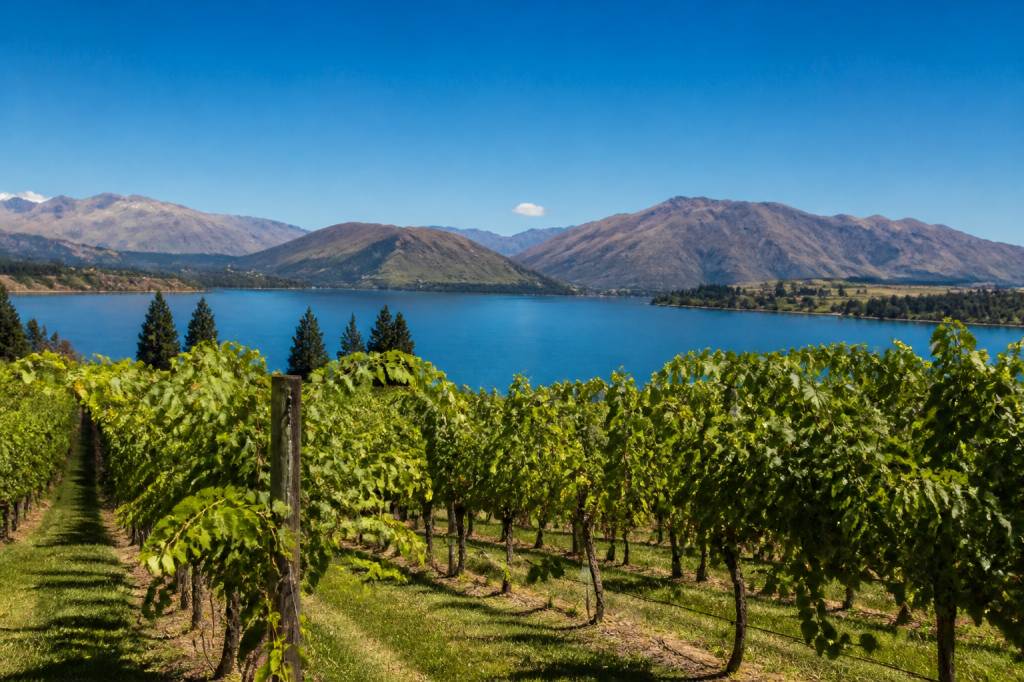
Mount Difficulty is one of those Central Otago names that keeps coming up for a reason: the wines are precise, site-driven, and rarely shy about where they come from. If you are looking for Pinot Noir that speaks clearly rather than loudly, this is a label worth your attention. And yes, the name is apt. Central Otago is a region where viticulture can feel like a controlled gamble: intense sunlight, cold nights, low rainfall, wind, and soils that often force the vine to work for every litre of juice. In other words, not exactly the soft option.
That challenge, however, is part of the appeal. Mount Difficulty has built its reputation on translating the Bannockburn landscape into wines with structure, freshness, and a distinctive savoury edge. The style is neither overloaded nor delicate to the point of fragility. It sits in a rather useful middle ground: concentrated enough to impress, but disciplined enough to age and pair with food. For anyone who values clarity over ornament, that matters.
What Mount Difficulty stands for
Mount Difficulty is based in Bannockburn, one of Central Otago’s most respected subregions. If you know the area, you already know the basic script: continental climate, pronounced diurnal shift, and an environment that can produce grapes with high flavour intensity while preserving acidity. If you do not know the area, think of a place where ripening is possible, but never guaranteed by default. The vines earn their fruit.
That is important because Central Otago Pinot Noir has a tendency, in less careful hands, to drift into overripe plum sweetness or extracted jamminess. Mount Difficulty generally avoids that trap. The wines tend to show a defined aromatic profile, firm but not severe tannins, and a line of acidity that keeps the fruit from collapsing into itself. You can taste the intent: ripeness, yes, but with restraint.
The estate also reflects a broader New Zealand pattern that has been quietly improving for decades. The country is no longer just a Sauvignon Blanc reference point; regions like Central Otago have demonstrated that Pinot Noir can be made with serious detail and, crucially, consistency. Mount Difficulty belongs to that conversation.
A brief history of the winery
Mount Difficulty was founded in the 1990s, at a time when Central Otago was still proving itself on the international stage. That matters. Early growers in the region were not simply making wine; they were testing whether this remote, dramatic landscape could support fine wine production at scale. The answer, now obvious in retrospect, required patience and a lot of technical discipline.
The winery’s early identity was closely tied to Bannockburn’s potential for Pinot Noir, but also to the notion that this region could produce more than one-dimensional fruit. Over time, Mount Difficulty developed a style rooted in site expression rather than sheer power. This is often the difference between a producer with ambition and a producer with ambition plus calibration.
There is also a practical historical point worth making: Central Otago’s reputation did not come from luck or marketing alone. It came from a succession of vintages that forced growers to adapt canopy management, harvesting decisions, and fermentation protocols to local conditions. Mount Difficulty emerged in that period with a clear focus on quality, not volume. That decision still shows in the wines.
Terroir: why Bannockburn matters
To understand Mount Difficulty, you need to understand Bannockburn. The subregion sits in a dry, inland environment with alluvial soils, schist-based fragments, and strong sunlight. These are not decorative details. They shape grape maturity, tannin phenolics, and the flavour profile in the glass.
Several features matter in practical terms:
-
Low rainfall: reduces disease pressure and often allows highly controlled ripening, but also demands careful water management.
-
Large day-night temperature swings: help retain acidity while developing aromatic complexity.
-
Mineral-rich, stony soils: encourage vine stress and small berries, which can translate into concentration and textural grip.
-
High UV exposure: contributes to thick skins, which is useful for colour and tannin in Pinot Noir, though it requires precision at harvest.
The result is a style of wine that often feels more structured than lush. If you are expecting soft, immediate fruitiness, Mount Difficulty may surprise you. If you prefer Pinot Noir with backbone, layered savouriness, and a sense that the wine is built rather than assembled, the surprise is a good one.
It is worth noting that Central Otago is not a one-note region. Even within Bannockburn, site variation can be substantial, and Mount Difficulty’s wines reflect that. The better cuvées typically show a strong sense of place rather than generic “New World Pinot” generosity. That distinction is critical.
Tasting notes: what to expect in the glass
Mount Difficulty’s range can vary by vintage and cuvée, but a few common threads appear regularly. The wines are usually cleanly defined aromatically, with fruit that sits alongside savoury, earthy, and sometimes floral elements rather than dominating everything else.
For the Pinot Noir, expect a profile along these lines:
-
Nose: dark cherry, ripe raspberry, blackberry, violet, dried herbs, crushed stone, and sometimes hints of forest floor or tea leaf.
-
Palate: medium to medium-plus body, fine-grained tannins, and fresh acidity that keeps the finish upright.
-
Texture: polished, with a measured density rather than obvious weight.
-
Finish: often savoury, with spice, mineral tension, and lingering red and dark fruit.
In stronger vintages, the wines can show greater depth and a slightly darker fruit register. In cooler years, expect more red fruit, more floral lift, and firmer structure. That variability is not a flaw. It is the point. Wines that flatten vintage character into a fixed house style tend to be technically neat and emotionally forgettable.
If you encounter Mount Difficulty Chardonnay, the style is usually more restrained than creamy. Look for citrus, white peach, hazelnut, and a subtle layer of oak rather than overt vanilla. Good examples should offer tension and precision, not butter for the sake of butter. A useful question is: does the oak support the fruit, or does it try to take over? In this context, support is the correct answer.
Riesling, where available, often leans into lime, green apple, floral notes, and brisk acidity, with the option of a touch of sweetness depending on the bottling. In Central Otago, Riesling can be an underrated part of the conversation, especially when the acidity is handled properly. It deserves more attention than it usually gets.
How Mount Difficulty Pinot Noir typically differs from broader Central Otago styles
Central Otago has a reputation for generous, fruit-forward Pinot Noir, but that shorthand is too crude to be useful. Mount Difficulty generally sits on the more structured and savoury side of the spectrum. The wines are rarely thin, but they also avoid the exaggerated sweetness that can make Pinot feel heavy and slightly self-conscious.
Compared with more exuberant examples from the region, Mount Difficulty often shows:
-
more line and tension;
-
less overt confectionary fruit;
-
more savoury nuance;
-
better immediate food compatibility;
-
stronger ageing potential in the better vintages.
That is not a value judgment against riper styles. It is simply a reminder that Pinot Noir is a broad category, and not every bottle needs to behave like a bowl of cherries in evening dress. Mount Difficulty’s wines often feel more gastronomic than hedonistic, and that is a strength.
Food pairings: where the wines really work
This is where Mount Difficulty becomes especially convincing. The combination of ripe fruit, acidity, and structural finesse makes the wines highly adaptable at the table. You do not need to force the pairing; the wines already want to eat.
For Pinot Noir, the obvious matches are also the best ones:
-
Roast duck with cherry glaze or orange reduction
-
Lamb loin or rack with rosemary, garlic, and root vegetables
-
Wild mushroom risotto, especially with thyme and parmesan
-
Seared salmon or tuna when the wine is on the fresher, more red-fruited side
-
Game birds such as quail or pigeon
-
Duck terrine or pâté en croûte for a colder starter
If the bottle leans toward a more savoury, earthy profile, lean into umami-rich dishes. Pinot Noir and mushrooms is not a cliché if the wine has the structure to carry it; it is simply good logic. Likewise, a lamb dish with herbs and a modest amount of fat will make the tannins look more refined and the fruit more vibrant.
For Chardonnay, think about dishes that echo freshness and texture:
-
Roast chicken with lemon and thyme
-
Pan-fried scallops with beurre blanc
-
Crab salad or lobster with light citrus dressing
-
Cauliflower gratin or dishes with nutty, creamy elements
Riesling opens the door to spicier cuisine. Thai green curry, Vietnamese dishes with herbs and lime, or lightly spiced pork can work very well, provided the sweetness level matches the heat. The old “white wine with fish” rule is a useful starting point, not a law of nature. Use the wine’s acidity and residual sugar intelligently, and the pairing becomes much more precise.
Serving tips and ageing potential
Mount Difficulty Pinot Noir benefits from a slightly cooler serving temperature than many people use at home. Around 14 to 16°C is a good target. Too warm, and the alcohol can push the fruit around. Too cold, and the savoury complexity gets locked away like a difficult accountant.
Decanting depends on the vintage and the bottle. A younger, firmer Pinot Noir may benefit from 20 to 30 minutes in a decanter or even simply a large-bowled glass. Older bottles should be handled more cautiously; gentle opening and a small sample first is often the smarter move.
As for ageing, the better Mount Difficulty wines can develop nicely over 5 to 10 years, sometimes longer for top cuvées in strong vintages. Expect tertiary notes to evolve toward dried cherry, leather, undergrowth, and spice. The key question is whether the fruit core remains intact. In the best bottles, it does.
Who will enjoy Mount Difficulty most?
These are wines for people who like their flavour with structure. If you want Pinot Noir that is immediately plush and sweet-fruited, you may find Mount Difficulty a touch more disciplined than expected. If, however, you appreciate wines that balance fruit, acidity, and savoury complexity, this is exactly the sort of producer that rewards close attention.
It is also a strong choice for readers who want to understand what Central Otago can do when the winemaking is thoughtful. The region’s reputation is deserved, but it is producers like Mount Difficulty that keep that reputation credible. The wines are not trying to imitate Burgundy, and they do not need to. They are more interesting when they behave like themselves.
If you are building a cellar, buying for dinner, or simply trying to sharpen your understanding of New Zealand Pinot Noir, Mount Difficulty is a highly instructive reference point. It shows what happens when terroir is handled with discipline rather than noise. And in wine, as in most serious subjects, clarity beats theatrics more often than not.