
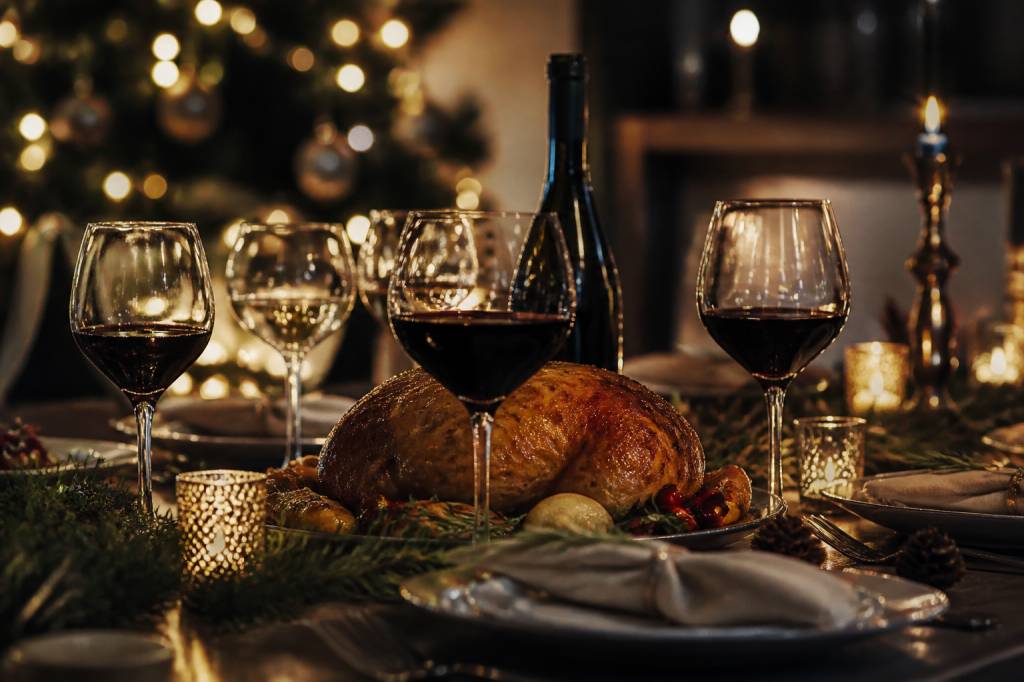
Choosing the best Christmas wine is not a matter of festive clichés. It is a question of balance: rich food, varied dishes, mixed preferences around the table, and a meal that often lasts far longer than planned. In other words, the wine has to do more than taste good. It has to adapt.
That is why the smartest holiday selections are rarely the most expensive bottles or the loudest labels. They are the wines with enough structure to handle roast meats, enough freshness to cut through butter, enough aromatic lift for spiced dishes, and enough versatility to survive the shift from starters to dessert without falling apart. If your Christmas table looks anything like most, you need wines that can work hard.
What makes a wine suitable for festive dinners?
Christmas food tends to be generous, layered, and often a little overindulgent. We are talking about roasted poultry, glazed ham, beef tenderloin, mashed potatoes, gravy, stuffing, root vegetables, smoked salmon, cheese boards, and desserts loaded with butter, cream, nuts, and dried fruit. That is not a polite dinner. That is a structural test.
The best Christmas wines usually share a few traits:
-
Good acidity to keep the palate fresh through rich food.
-
Moderate to firm tannins for roasted meats, but not so aggressive that they fight with turkey or ham.
-
Aromatic complexity, because holiday dishes are often seasoned with herbs, spices, citrus, and sweet elements.
-
Alcohol in check, ideally, because nobody wants a wine that feels heavy before the main course arrives.
-
Enough versatility to pair with more than one dish, since Christmas menus are rarely linear.
If I had to summarize the selection logic in one sentence: pick wines that refresh, not wines that merely impress.
The safest red wines for Christmas dinner
Red wine is often the default choice for festive meals, but not every red is suitable. High-tannin, high-alcohol monsters can overwhelm turkey and ham, while overly light reds can disappear next to roast beef. The sweet spot lies in medium-bodied reds with ripe fruit, moderate tannins, and some savory depth.
Pinot Noir: the most reliable all-rounder
Pinot Noir is one of the most useful Christmas wines because it does not bully the food. Its natural acidity and red-fruit profile allow it to pair with roast turkey, duck, mushroom stuffing, and even salmon if your festive menu starts with a more elegant course. The best examples come from Burgundy, Oregon, New Zealand, and certain cooler regions of Germany or England, where freshness is preserved.
Why does it work so well? Because Christmas meals often contain several competing flavours: sweet glaze, herb stuffing, earthy vegetables, and rich sauces. Pinot Noir can bridge those elements without forcing the pairing. It is not the loudest voice at the table, but it is often the smartest one.
Look for bottles with moderate oak and a clean, savoury finish. A heavily toasted, extraction-heavy Pinot Noir is the wrong tool here.
Gamay and lighter-style reds: underrated but effective
Beaujolais, especially Cru Beaujolais, deserves more respect at Christmas. Gamay offers bright red fruit, lively acidity, and a texture that sits comfortably with roast poultry, charcuterie, and vegetarian mains built around mushrooms or nuts. Morgon, Fleurie, and Moulin-à-Vent can bring more depth without losing freshness.
For a more casual holiday gathering, this is often the bottle people finish first. That is not an accident. Gamay tends to drink with ease, and ease matters when you are serving a room full of people with different preferences and different levels of wine tolerance.
Syrah and Grenache blends: better with roast meats
If your Christmas table leans toward beef, lamb, venison, or a strongly seasoned roast, a Rhône blend or a restrained Syrah can be an excellent choice. Syrah brings pepper, dark fruit, and meaty intensity, while Grenache softens the edges with warmth and plush fruit. Together, they offer enough body for richer dishes without tipping into heaviness.
Look for examples from the Northern Rhône if you want precision, or from the Southern Rhône if you prefer a more generous style. Just avoid excessively jammy versions. Holiday food already brings sweetness from glaze, carrots, parsnips, and sauces. The wine should complement that, not amplify it into syrup.
White wines that can actually survive Christmas food
White wine is often underestimated during festive meals, mostly because people assume Christmas means red wine by default. That is lazy thinking. Some of the best holiday pairings are white. The key is choosing wines with enough texture and acidity to stand up to richness.
Riesling: the precision instrument
Dry or off-dry Riesling is one of the finest Christmas wine choices available. It can handle salty starters, smoked fish, pork, Asian-inspired holiday dishes, and even spicy elements in a Christmas glaze. Its high acidity cuts through fat, while its aromatic profile offers citrus, stone fruit, floral notes, and often a subtle mineral backbone.
German Riesling, especially from the Mosel, Rheingau, or Pfalz, is particularly useful because it can come in many styles, from bone-dry to delicately sweet. That flexibility matters. If you are serving a menu with sweet-and-savoury contrasts, a Kabinett or trocken Riesling can be almost surgical in its precision.
One practical note: if your guests claim they “don’t drink white wine in winter,” hand them a good Riesling with roast pork and watch that opinion soften in under ten minutes.
Chardonnay: only if the oak is under control
Chardonnay can be a superb festive wine, but only when handled properly. Overoaked, buttery versions can flatten the palate and create fatigue, especially during a long meal. A well-made Chardonnay with restrained oak, crisp acidity, and a little creamy texture can pair beautifully with roast chicken, turkey, shellfish starters, and creamy side dishes.
Think Burgundy, Chablis, or cool-climate Chardonnay from regions that prioritize tension over size. Chablis is especially effective with seafood starters, oysters, and canapés, while a fuller but balanced Chardonnay can carry the main course if the sauce is rich but not sweet.
Albariño and other fresh whites for the aperitif stage
Before the main meal, you need wines that wake up the palate rather than tire it out. Albariño, Grüner Veltliner, and dry sparkling wines are excellent for this role. Albariño offers citrus, salinity, and a crisp finish that works with smoked salmon, seafood canapés, and fried starters. Grüner Veltliner brings white pepper, green herbs, and bright acidity, making it surprisingly adaptable to holiday hors d’oeuvres.
If your Christmas gathering begins with many small plates, avoid heavy whites that feel like they are already at the main course. Start clean and structured.
Sparkling wine is not optional
Every serious festive table should include sparkling wine. It is not just for toasts. Sparkling wine is one of the most functional food wines ever made, and Christmas is exactly the kind of occasion where functionality matters.
Champagne: the benchmark for a reason
Champagne is the most complete sparkling option for holiday dinners. Its acidity, autolytic complexity, and fine mousse make it versatile from canapés to fried starters to rich mains. Brut styles are generally the safest choice, though Extra Brut works well if the food is especially rich.
Non-vintage Champagne is usually the pragmatic option for large gatherings because it offers consistency and value. Vintage Champagne is better if the menu is refined and you want more depth. Either way, Champagne should not be reserved for midnight. Put it on the table early and let it do some work.
Crémant, Cava, and quality English sparkling wine
You do not need to spend Champagne money to get serious quality. Crémant de Bourgogne, Crémant d’Alsace, top Cava, and English sparkling wine can all perform very well at Christmas. English sparkling, in particular, has developed a strong reputation thanks to its bright acidity, chalky precision, and excellent method traditional production. It pairs especially well with smoked salmon, oysters, and starters with delicate fat and saline notes.
For many hosts, these bottles are the most sensible purchase in the entire holiday season. They offer lift, elegance, and enough gastronomic grip to justify opening them before the turkey appears.
Sweet wines for dessert and after-dinner cheese
Christmas dessert is where many wine pairings fail. People open a dry red and hope for the best. That is a mistake. Dessert needs wine with equal or greater sweetness than the dish, otherwise the wine tastes thin, sour, and oddly apologetic.
Sauternes and late-harvest whites
Sauternes remains one of the great holiday wines, especially with fruit tarts, blue cheese, foie gras, or desserts involving caramel and roasted nuts. Its honeyed texture, botrytis complexity, and balancing acidity make it far more versatile than people assume. Tokaji Aszú, late-harvest Chenin Blanc, and German Beerenauslese can play a similar role with slightly different flavour profiles.
If your Christmas dessert leans creamy rather than fruity, these wines provide lift without losing generosity. The mistake to avoid is using too little sweetness. A wine that is only semi-dry will struggle against pudding, mince pies, or anything with rich sauce.
Port and fortified wines for the final stage
Once the cheese board appears, fortified wine becomes very relevant. Tawny Port is particularly effective with hard cheeses, nut-based desserts, and dried fruit. Its oxidative notes, caramelized flavours, and silky texture feel almost purpose-built for the end of a festive meal. Vintage Port is more powerful and more dramatic, but it needs stronger cheese and a crowd with patience.
If you want a quieter but equally useful option, Madeira is one of the most underrated Christmas wines. Its acidity and stability make it excellent with nuts, fruitcake, and aged cheese. It is not trendy, but it works. Which is more than can be said for some holiday bottles chosen purely for label art.
Practical pairing guide for common Christmas dishes
If you want a quick roadmap, here is how I would match the most common festive plates:
-
Roast turkey: Pinot Noir, dry Riesling, unoaked or lightly oaked Chardonnay.
-
Glazed ham: Gamay, off-dry Riesling, sparkling wine with good acidity.
-
Beef tenderloin: Bordeaux blend, Syrah, mature Cabernet Sauvignon with restraint.
-
Duck: Pinot Noir, Champagne, northern Rhône Syrah.
-
Smoked salmon: Champagne, English sparkling wine, Albariño, Chablis.
-
Vegetarian nut roast: Gamay, Grenache blend, Chardonnay, dry Chenin Blanc.
-
Christmas pudding: Tawny Port, Sauternes, Madeira.
-
Cheese board: Port, Madeira, mature Riesling, structured red with age.
How to avoid common Christmas wine mistakes
The biggest error is choosing one “big” wine to dominate an entire meal. That rarely works. Festive dinners are too varied. Another common mistake is serving wines too warm or too cold. Red wine that is room temperature in a heated house may be far too warm; white wine pulled straight from a warm kitchen may lose its edge. Temperature matters more than people admit.
A few practical rules help:
-
Serve sparkling wine well chilled, but not ice-cold.
-
Chill aromatic whites enough to preserve freshness.
-
Light reds benefit from a slight cool-down, especially indoors.
-
Decant young structured reds if they need air, but do not overdo it with delicate bottles.
-
Keep one versatile wine on hand as a backup for unpredictable guests and unexpected dishes.
Holiday wine service is not about formality. It is about control. A well-chosen bottle served at the right temperature will outperform a more expensive bottle handled badly.
The best overall Christmas wine strategy
If you want a practical shopping plan, do not buy a single bottle and hope it suits everything. Build the meal in stages. Start with sparkling wine, move to a flexible white or light red for starters, choose a structured but not overpowering red for the main course, and finish with a sweet or fortified wine for dessert and cheese.
That approach is not fussy. It is logical. Christmas is one of the few times of the year when guests expect progression in the glass as much as on the plate. Use that to your advantage.
My short list for a festive dinner, if I had to keep it disciplined, would be Champagne, Riesling, Pinot Noir, and Tawny Port. That quartet covers far more ground than most people think. Add one good Chardonnay or a red blend if the menu is especially rich, and you are well equipped.
The best Christmas wine is not the one with the most holiday marketing. It is the one that keeps the meal moving, cleans up the palate, and makes the food taste more like itself. That is the real test. Everything else is decoration.