
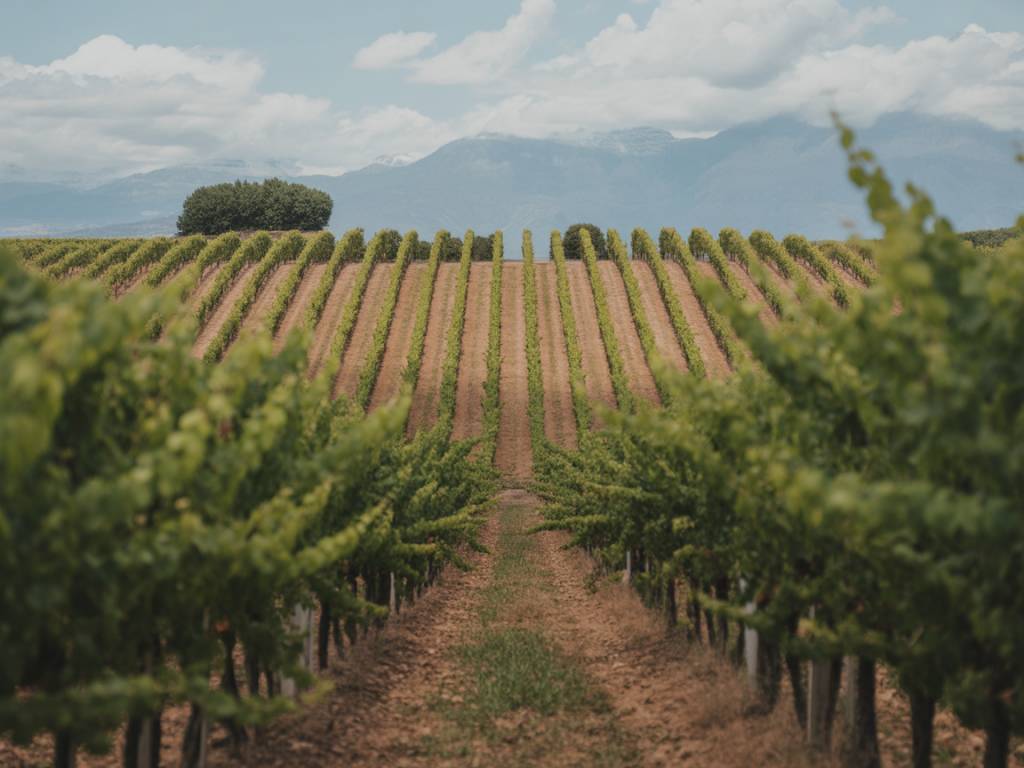
In many of the world’s classic wine regions, vines have been grown for centuries without a single drop of irrigation. Today, as droughts intensify and water resources are strained, this traditional approach — known as dry farming — is attracting renewed attention. Beyond its environmental appeal, dry farming is increasingly recognized as a powerful tool to shape wine style, enhance complexity and preserve a sense of place in the glass.
What does dry farming actually mean?
Dry farming, or dry-grown viticulture, refers to cultivating vines without supplemental irrigation once the plants are established. The only water the vine receives comes from rainfall and, in some cases, residual soil moisture stored over winter.
This practice is especially prominent in Mediterranean climates and historic wine regions such as:
- Old-vine vineyards in Spain’s Rioja, Ribera del Duero and Priorat
- Southern France, notably in parts of the Rhône Valley, Languedoc and Provence
- Italy’s traditional appellations, including Chianti Classico and Etna
- Portugal’s Douro Valley terraces
- Certain dry-farmed pockets of California, Oregon and South Australia
While regulations in some European appellations strictly limit or even prohibit irrigation, in many New World regions dry farming is more a philosophical choice than a legal requirement. Producers who embrace it often do so for both environmental and qualitative reasons.
The environmental logic: using less water, more intelligently
The most obvious advantage of dry farming is reduced water usage. Irrigation, especially in arid regions, can place a heavy burden on rivers, groundwater and reservoirs. As climate change amplifies heatwaves and droughts, the sustainability of irrigated agriculture is under increasing scrutiny.
Dry-farmed vineyards typically:
- Use a fraction of the water required for conventional drip-irrigated vineyards
- Encourage deeper root systems that access water stored far below the surface
- Rely on soil health, cover crops and careful vineyard design rather than mechanical watering
By pushing roots deeper into the soil profile, dry farming also increases a vine’s resilience during drought years. Instead of relying on shallow, irrigated root zones that can dry quickly, dry-farmed vines tap into more stable underground reserves. In the long run, this can make vineyards more robust in the face of climatic extremes.
How dry farming changes the vine’s behavior
Water availability drives how a vine grows. When water is abundant, the plant tends to favor vegetative growth: more leaves, longer shoots, denser canopies. While lush vines can look healthy, excessive vigor is not always ideal for wine quality.
Under dry-farmed conditions, vines experience a controlled level of water stress. They respond in several key ways:
- Reduced vigor: Less water often means fewer leaves and shorter shoots, leading to a more open canopy and better sunlight exposure for the fruit.
- Lower yields: Dry-farmed vines typically carry fewer bunches, and the berries themselves are often smaller.
- Enhanced root systems: Roots travel deeper and spread wider in search of moisture, interacting with different soil layers and mineral horizons.
These physiological changes have direct implications for the grapes and, ultimately, the wines produced from them.
Flavor, texture and structure: why quality-focused producers embrace dry farming
From a wine lover’s perspective, the most important effects of dry farming manifest in the glass. Winemakers often describe dry-farmed wines as more concentrated, textural and expressive. Several key factors are at play:
- Smaller berries, higher skin-to-juice ratio: With less water, grape berries remain smaller. This increases the proportion of skins to juice, which can intensify color, tannin and aroma compounds, especially in red varieties such as Syrah, Grenache and Cabernet Sauvignon.
- More precise acidity: Controlled water stress can slow ripening and help preserve acidity. Dry-farmed wines often show a more linear, focused structure rather than a broad, soft profile.
- Enhanced aromatic complexity: Deeper root systems encounter varied soil compositions, which many growers believe contributes to greater nuance and detail in the wine’s aromatic profile.
- Textural depth: There is often a tactile quality — a kind of density without heaviness — that tasters associate with dry-farmed fruit, especially in old-vine parcels.
These attributes make dry-farmed wines particularly appealing to drinkers seeking authenticity and regional character rather than sheer ripeness or volume.
Challenges and limitations of dry farming
Despite its advantages, dry farming is not a universal solution. It works best under specific conditions, and it comes with trade-offs that both growers and consumers should understand.
- Climate constraints: In regions with extremely low rainfall and very high summer temperatures, fully dry-farmed viticulture may be unrealistic. Young vines in particular often need some irrigation to establish roots during the first years.
- Soil requirements: Deep, water-retentive soils (clay, certain volcanic or loam-based compositions) are better suited to dry farming than very shallow, rocky or sandy soils that lose moisture quickly.
- Lower yields: Dry-farmed vineyards generally produce fewer grapes per hectare. This can push up costs per bottle, especially when combined with manual work required on steep or old-vine sites.
- Year-to-year variability: In drought years, yields may fall further, or grapes may require even more careful handling to avoid excessive stress and imbalance.
These factors help explain why many producers opt for a hybrid approach: minimal, carefully timed irrigation to support vine health, rather than strict dry farming in all circumstances.
Key vineyard practices that support dry farming
Successfully growing vines without irrigation involves a series of deliberate decisions, from the layout of the vineyard to the choice of cover crops. Among the most important techniques are:
- Low planting density in arid regions: Giving each vine more space reduces competition for scarce water and allows roots to spread widely underground.
- Thoughtful rootstock selection: Drought-tolerant rootstocks, such as those used in Mediterranean regions, help vines cope with limited water availability.
- Soil management and organic matter: Adding compost, maintaining ground cover and minimizing deep tillage all contribute to improved soil structure and moisture retention.
- Canopy management: Pruning strategies and leaf removal are adjusted to balance shade and sun, minimizing unnecessary transpiration while still ripening the fruit effectively.
- Timing of interventions: Growers monitor vine water status closely, adjusting operations such as shoot thinning or green harvesting to match the season’s conditions.
In many dry-farmed vineyards, these techniques blend traditional know-how with modern monitoring tools, such as soil moisture probes and leaf water potential measurements. The objective is not simply to deny water, but to manage scarcity intelligently.
How to identify dry-farmed wines as a consumer
For drinkers interested in supporting water-efficient viticulture, finding dry-farmed wines can require a bit of detective work. Not all producers advertise the practice prominently, and there is no universal certification dedicated solely to dry farming.
Several strategies can help:
- Study labels carefully: Some wineries explicitly mention “dry-farmed,” “dry-grown” or “non-irrigated” on the back label or technical sheets.
- Research specific regions: Appellations that traditionally restrict irrigation — many classic European regions — are good starting points if you are seeking wines from dry-farmed vineyards.
- Explore producer websites: Quality-focused domaines often detail their viticultural philosophy online, including whether they use irrigation and under what circumstances.
- Ask your wine merchant: Independent retailers and sommeliers can usually point you toward producers known for dry farming, especially in regions like California’s Sonoma and Mendocino, Oregon’s Willamette Valley, or parts of South Australia.
While there is no guarantee that a dry-farmed wine will automatically taste better, many of the producers who commit to this approach tend to be attentive to every detail of vineyard management and winemaking. This often correlates with higher overall quality.
Styles and grape varieties that shine under dry farming
Certain grape varieties and wine styles seem particularly well adapted to dry farming. These tend to be varieties that evolved in warm, often Mediterranean climates and can tolerate a degree of water stress.
- Grenache/Garnacha: Widely planted in Spain and southern France, Grenache thrives in dry, warm conditions, yielding wines with lifted red fruit, spice and a distinctive sense of place.
- Carignan, Mourvèdre and other Mediterranean reds: These grapes are naturally drought-tolerant and can develop remarkable depth and savory complexity under dry-farmed regimes.
- Old-vine Zinfandel: In California, many heritage Zinfandel vineyards are dry-farmed, producing concentrated yet often surprisingly fresh wines.
- Structured whites: Varieties such as Chenin Blanc, Riesling (in some regions), and certain indigenous Mediterranean whites can gain tension, minerality and age-worthiness when grown without supplemental irrigation.
That said, climate, soil and the hand of the grower matter as much as the variety itself. Dry farming is one piece of a larger puzzle that determines wine style and quality.
What dry-farmed wines offer to the thoughtful drinker
For those who enjoy exploring the nuances of terroir, dry-farmed wines offer a compelling proposition. They tend to be:
- More transparent to site: Reduced yields and deeper root systems often translate into wines that feel anchored to their origin, with distinctive texture and minerality.
- Structured and age-worthy: Balanced acidity and concentrated phenolic content can give dry-farmed wines the ability to evolve gracefully in bottle.
- Aligned with sustainability goals: Lower water usage, improved soil health and long-term resilience of the vineyard all support more responsible winegrowing.
For consumers, seeking out dry-farmed bottles is both a sensory journey and a conscious choice in support of growers who adapt their methods to a changing climate. Whether you gravitate toward Mediterranean reds, cool-climate whites or old-vine field blends, there is a growing array of dry-farmed wines that combine environmental awareness with genuine complexity in the glass.